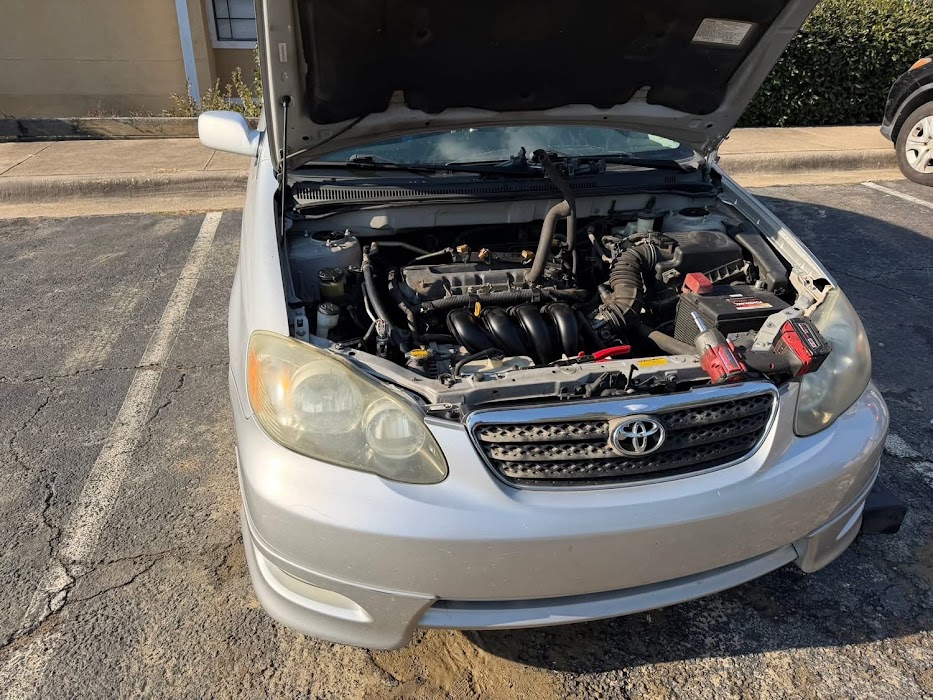
Your car's heating and cooling system depends on a handful of parts all doing their job at the same time. The compressor, condenser, blower motor, and heater core all have to work together to keep air moving and at the right temperature. Over time, seals dry out and crack, refrigerant slowly leaks away even without a dramatic failure, and parts like the blower motor just wear down from years of spinning. A system that's low on refrigerant won't cool the cabin no matter how high you crank the fan. A heater core that's clogged or leaking won't push warm air through the vents, even if the engine itself is running fine. Oklahoma weather doesn't make it easier. Hot summers and cold winters both push these systems hard, so the first time you notice trouble is usually the worst possible time, right when you need heat or A/C the most.
Signs Your Heating or A/C Needs Attention
- A/C blows warm air instead of cold
- Heater takes forever to warm up or never does
- Weird smell coming from the vents
- Weak airflow even on the highest fan setting
- Strange noise when you turn on the A/C
- Windows fog up and won't clear
When you bring your car to us for a heating or cooling complaint, we start by figuring out what the system is actually doing, not just what it's supposed to do on paper. We check refrigerant pressure with gauges, since too little or too much points to different problems. We look for physical signs of a leak around hoses, fittings, and the compressor itself. We listen to the compressor when it kicks on, since a bad bearing or clutch often makes noise before it fails completely. For heat complaints, we check coolant levels and take a look at the heater core and blend door, which controls how much warm air mixes into the cabin airflow. We also check the blower motor and the cabin air filter, because a filter clogged with dust and debris can choke off airflow and feel a lot like a bigger mechanical problem. We rule things out methodically before we tell you what's wrong.
Once we know what's actually causing the problem, the repair depends on what we found. A small leak gets fixed first, then the system gets a proper refrigerant recharge so it can hold pressure again instead of slowly losing cooling power over the next few weeks. A compressor that's grinding, seized, or not engaging right usually needs to be replaced outright, since it's the part that actually pressurizes the refrigerant and makes the whole system work. A blower motor that's gotten noisy, weak, or stopped moving air gets swapped for one that runs smooth and quiet. Heater core problems are handled carefully, since we check coolant flow and hoses first, because a full core replacement is a bigger, more involved job and we want to be sure it's actually needed before going that route. We also check electrical connections and fuses along the way, since sometimes a system that seems completely dead is just not getting power to begin with.
Every fix gets tested before we consider the job finished. That means running the system through its paces, checking that cold air stays cold at idle and at higher engine speeds, confirming the heater actually produces warm air and holds it, and making sure the blower moves air at every fan speed without new noises showing up. We also recheck refrigerant pressure after a recharge to confirm it's holding steady and not slowly dropping again, which would point to a leak we haven't caught yet. For heater core work, we confirm coolant isn't leaking anywhere and that the blend door is actually directing air where it should. We don't just assume a repair worked because the part is new. We confirm it's working the way it's supposed to before calling the job done and handing the keys back.
How big a job this turns into really depends on what's actually broken. A small leak repair followed by a recharge is a fairly contained job, since the refrigerant lines and fittings are usually accessible without tearing into the dash or engine bay. A failing compressor takes more time, since it often means dealing with refrigerant recovery, mounting brackets, belts, and sometimes other parts nearby. A heater core buried deep in the dash is on the more involved end, since reaching it can mean removing dash components just to get to the core itself. The age of the vehicle and how well the system has been maintained over the years also plays into how straightforward or complicated the repair ends up being. Corrosion, brittle hoses, and old seals can turn what looks like a simple fix into something that takes more care and more steps.
Because the scope can vary so much from one car to the next, we walk you through exactly what we found before any work begins. That means explaining what part is failing, why it's failing, and what it's going to take to fix it properly, whether that's a quick refrigerant recharge or something more involved like a compressor or heater core replacement. We want you to understand the actual problem, not just hear a part name and a nod. If there are a couple ways to approach the repair, we'll talk through what each one involves. You should know what's happening with your car before we touch it, not just after the bill is already written.
If your A/C has stopped blowing cold, or your heat barely puts out warm air anymore, don't just turn the fan up and hope it works itself out. These systems don't usually fix themselves, and a small leak or a weak blower motor tends to get worse, not better, the longer it runs. It's worth getting looked at, especially before a long drive through an Oklahoma summer where the heat index climbs fast, or a winter stretch where a dead heater makes every morning commute miserable. Catching a small issue with refrigerant level or a blower motor early can save you from being stuck with no climate control at all on the day you need it most. We're in Tulsa and cover the surrounding area, including Sapulpa, Jenks, Glenpool, Sand Springs, Kiefer, Kellyville, and Lotsee, working on these systems one car at a time.
What to Tell Us When You Call
- Year, make, and model of your vehicle
- Whether it's the heat, the A/C, or both acting up
- Any smells, noises, or fogging you've noticed
- Your location in or around Tulsa so we can plan the visit